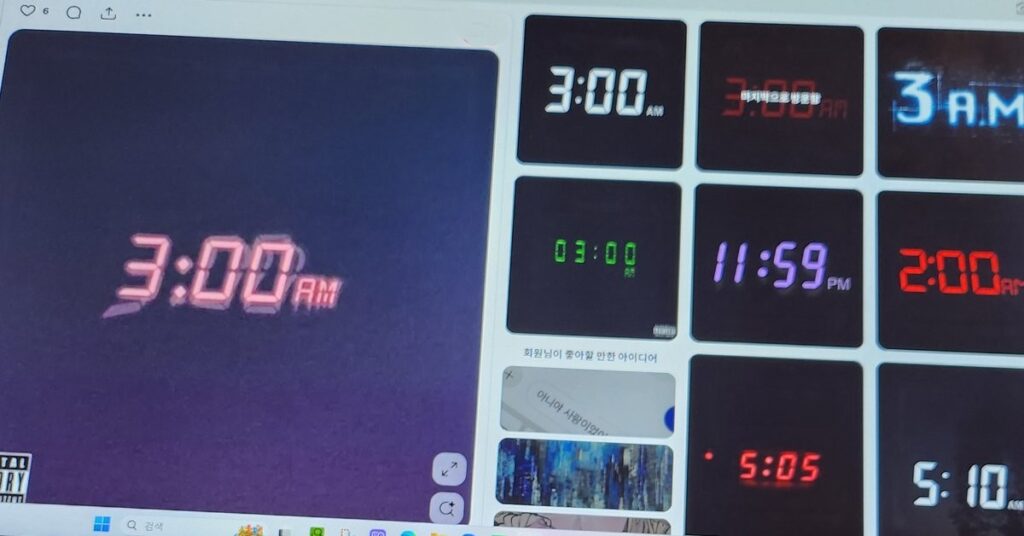
ADHD attention dysregulation looks like this for me: It’s 3 a.m. and I am wide, wide awake.
Not anxious-awake. Not can’t-sleep awake. Locked-in awake — the kind where something has caught my whole brain and won’t give it back. I glance up and somehow it’s 1, then 2, then 3, and I think just one more thing about nine more times. Then I finally crash, and sleep until 11 the next morning.
Since I left nursing after my shoulder surgery, there’s nothing to stop me. No alarm I have to beat, no shift, no commute. Just me, a project, and a night with no edges. (This very blog may or may not be the most recent culprit.)
ADHD attention dysregulation: is it really “attention deficit”?
Not exactly — ADHD isn’t a lack of attention; it’s trouble regulating it. Here’s the thing most people get wrong about ADHD. They hear “attention deficit” and picture someone who can’t focus on anything. That’s not my experience at all.
There’s a reason “attention deficit” is a misnomer. As Dr. William Dodson explains, the ADHD brain runs on an interest-based nervous system(William Dodson, “Secrets of the ADHD Brain,” ADDitude, November 3, 2025) — it doesn’t run out of attention, it scatters attention unevenly and engages focus only under interest, novelty, challenge, or urgency. That’s attention dysregulation, not a shortage: at 3 a.m. the quiet, the novelty, and the urgency finally line up, so the same brain that couldn’t start a boring task all day locks on hard. The goal isn’t to force more attention — it’s to build the conditions that let my attention land where I actually need it.
“Attention deficit is a misnomer.”
— William Dodson, M.D., 2025
I can focus. I can focus like my life depends on it. The problem is that I can’t always choose where the focus goes, or when it stops. ADHD isn’t a lack of attention — it’s a failure to regulate it. The tap is either off, or blasting at full pressure with the handle snapped clean off.
When something really grabs me, I don’t ration it. I pour everything in, tonight, as if there’s no tomorrow — because in that state, there honestly doesn’t feel like one.
Here’s the mechanism underneath it. My attention isn’t steered by what’s important; it’s steered by what’s interesting in the moment — a wiring difference I dug into in my job-hopping story. So a dull-but-urgent task slides right off me, while a shiny, stimulating one — hello, new project at midnight — grabs the wheel and won’t let go. It isn’t that I chose the 3 a.m. deep-dive over sleep. My attention chose it for me, and forgot to ask. That’s the whole trap: the steering wheel works fine. I just don’t always get to hold it.
What happens to an ADHD brain with no 9-to-5?
For years, my job did my regulating for me. I had to be somewhere at a certain time, so the all-nighters had a hard ceiling. Work was scaffolding I didn’t even know I was leaning on.
Then I left to recover, started working from home, and that scaffolding quietly disappeared. No one’s waiting. Nothing on the outside says stop now. And it turns out that for an ADHD brain, “total freedom” and “no structure” can be the same sentence — and that sentence keeps ending with me watching the sunrise.
The hyperfocus is a real gift. It’s how I learn fast, build things, get a whole project off the ground in a weekend. But a gift with no off-switch starts billing you the next day — in lost mornings, wrecked sleep, and a body (and a healing shoulder) that needed the rest.
And I’m not the odd one out here. Sleep problems affect an estimated 40–80% of adults with ADHD, and a delayed body clock — being wired to fall asleep late and wake up late — is the most common type (Carly Broadway, “ADHD Sleep Problems Linked to Gender, Mental Health: Study,” ADDitude, November 5, 2024). Women with ADHD tend to report even more sleep trouble than men, which tracks, painfully, with my own nights. So my 3-a.m.-to-11-a.m. pattern isn’t a personal failing. It’s almost a house style for this kind of brain.
So what am I doing about it?
Honestly? I’m still figuring this out — that’s what these diaries are for.
What I’m testing right now is putting the “stop sign” back myself, since no boss will do it for me: an alarm that means bed, not snooze; a hard cutoff time that I actually tell someone else about; and trying to start big tasks in the morning instead of 10 p.m., so the hyperfocus runs into daylight instead of dawn. Some nights it works. This week, clearly, it didn’t.
The thread running through all of it is the same one I keep relearning: an ADHD brain does better when the structure lives outside it, not inside. It’s the same lesson from my time-blindness diary — an alarm that means bed, a hard cutoff I say out loud to someone so it’s real, a start time early enough that the hyperfocus burns into daylight instead of dawn. The fix was never more willpower at 2 a.m. It’s setting the stop sign while I can still see straight.
But naming it helped. “I have no willpower at night” is a story that only makes me feel worse. “My attention doesn’t self-regulate, and I removed the thing that used to regulate it for me” — that’s something I can actually work with.
And this week, that thinking led somewhere I didn’t quite expect: I’ve started looking for a job again.
Not just for the paycheck — though, yes, that matters too. For someone like me, an ADHD nurse, a job is two birds with one stone: it pays me, but it also hands me back a healthy routine — a built-in stop sign, mornings that mean something, a reason the night has to end. I won’t pretend this unleashed freedom hasn’t been sweet. It has. But it’s been a runaway, handle-snapped-off kind of freedom — a bit of a rascal — and I think it’s finally time to hand it back.
A new job isn’t all excitement, of course. There are nerves, and plenty of what-ifs. But that part, I’ll save for the next entry.
Are you a hyperfocuser too? And have you ever found that structure — a job, a routine, an outside reason to stop — was the thing that actually helped? Tell me in the comments.
To be continued…
This is my personal experience, not medical advice. If sleepless nights are wearing you down, it’s worth talking to a doctor — ADHD, sleep, and mood are more tangled than they look.
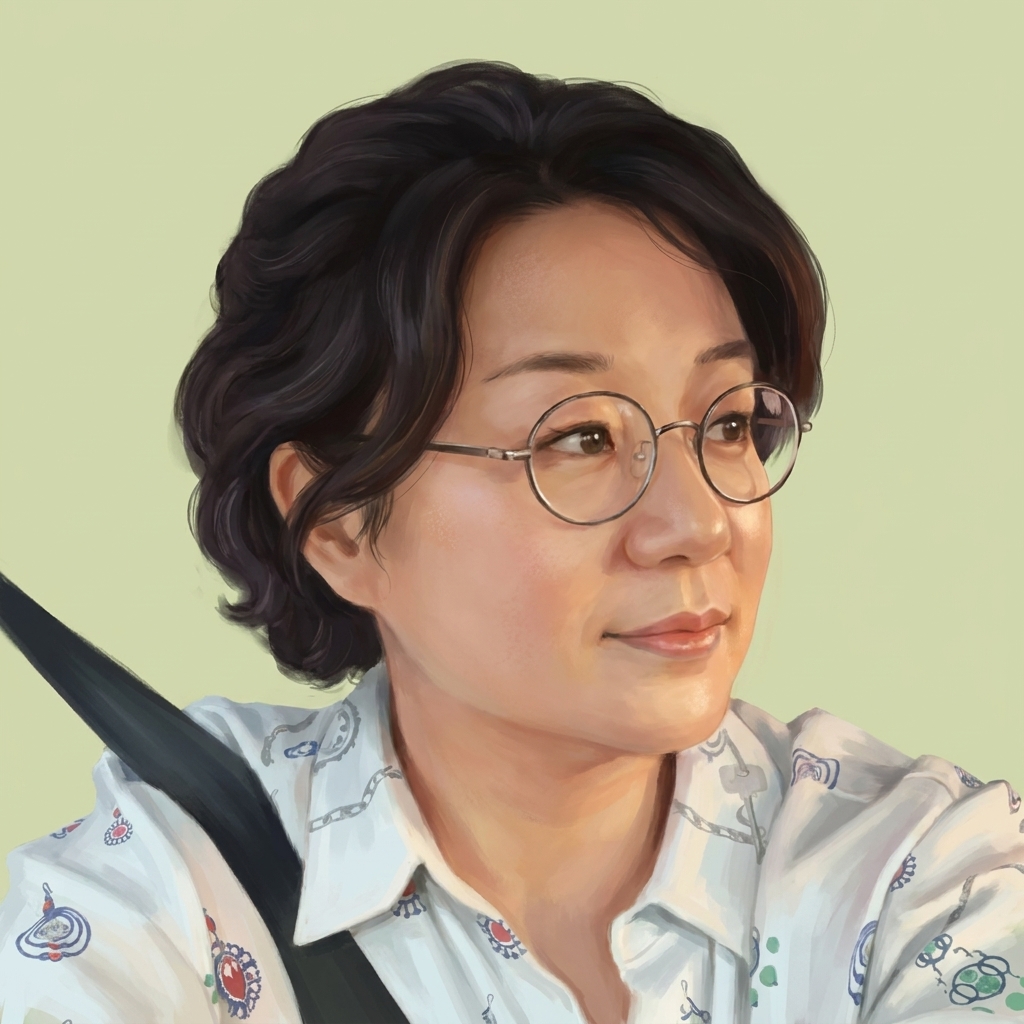
Grace is a registered nurse with thirteen years of clinical experience — five in Australia and eight in Korea — who also lives with ADHD. She writes The ADHD Nurse: honest, first-person guides and diaries about working, parenting, and getting through the day with an ADHD brain. Everything here is her personal experience and general information, not medical advice.