ADHD emotional dysregulation has two faces in me — and a friend once named the first. “You lose your temper more than you realize,” she said. “And the hard part is when — it comes when no one sees it coming. It catches everyone off guard.” She wasn’t being cruel. She was being honest, and she was right.
What surprised me more was the opposite version of me. I can also be the very opposite of explosive — I can be oblivious. When my son was ten, he had a little keloid scar on his elbow that needed some looking after. It took me longer than it should have to notice and tend to it — not because I didn’t love him (I would have done anything for that boy), but because I genuinely didn’t register it. The signal simply never reached me. He still carries that small mark, and these days I see it as a quiet reminder of how easily I can miss what is sitting right in front of me.
For most of my life I had no word for either version of myself: the one who erupts without warning, and the one who misses what is sitting right in front of her. Now I do. It’s called ADHD emotional dysregulation, and for a lot of us with ADHD, it runs the whole show.
And here is the part I most need to say out loud, before anything else: this is not harmless. The people closest to me — my child, the ones who deserved my softest attention — are exactly the ones it has hurt the most.
ADHD emotional dysregulation: is sudden anger part of it?
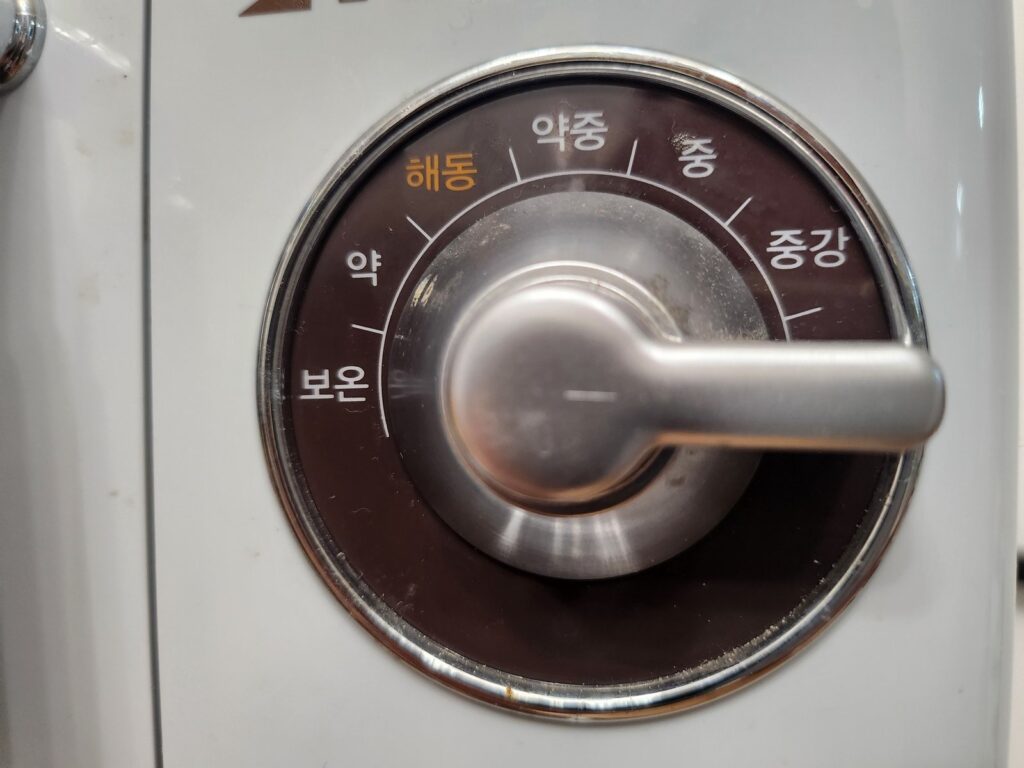
Yes — anger that erupts “out of nowhere” is often emotional dysregulation: an emotional volume dial stuck too high. Think of your brain as a vast network, with different regions handling memory, the senses, and emotion. As we grow up, the brain learns to keep those emotional signals at a manageable level — like a volume dial that holds the sound where you can stand it. With emotional dysregulation, that dial is stuck too high. The emotion arrives too loud to manage, and it spills out as a sudden flare before you’ve had any chance to catch it. The Cleveland Clinic describes it almost exactly that way — emotions turned up to a disruptive, even painful level, too loud to control (Cleveland Clinic, “Emotional Dysregulation,” last updated November 13, 2025).
“Sometimes, big feelings burst outward (like yelling or slamming doors). Other times, they turn inward (going quiet or checking out).”
— Cleveland Clinic, 2025
For many of us with ADHD, this pairs with Rejection Sensitive Dysphoria (RSD) — where criticism or rejection that other people shrug off lands like a physical blow. A small comment, a certain tone, a look I read as disapproval, and the volume spikes. From the outside it looks like I “overreacted out of nowhere.” On the inside, the nowhere was very real, and very loud.
There’s a quieter cost to this too. When your worth feels like it’s always one criticism away from collapse, you armour up. Perfectionism becomes a shield against being judged, and underneath it sits a self-esteem that has taken years of small hits. So when the criticism does come, it doesn’t just sting — it threatens the whole structure. No wonder the dial jumps.
I still remember exactly where I was the day my friend said those opening words to me. I was pulling my car into a shopping-centre parking lot. Her tone was so gentle that, just as my defenses were rising, I let them down instead. She had known me since high school — fifteen years — and somehow that let the words land. It was, honestly, the first time I can remember truly taking in a piece of negative feedback instead of deflecting it. Maybe that’s the quiet lesson buried in RSD: the criticism was never really the enemy. What mattered was whether I felt safe enough to hear it.
Why do I miss the things that matter to people I love?
If rage is the volume stuck too high, the other face of this is the signal that never reaches me at all.
Researchers have a name for part of this: alexithymia, sometimes called “emotional blindness.” It’s more common in people with ADHD than in the general population — in one study of adults with ADHD, about one in five (22%) were highly alexithymic — and it means a genuine difficulty noticing and naming emotions (Edel et al., 2010, European Journal of Medical Research). One component of it is an externally oriented style of thinking: being tuned to the concrete, the visible, the things you can do and measure.
That is me, to a fault. My whole sense of worth has been built on work, action, results I can point to. Achievement I can see, I chase. But love mostly lives in the invisible — a mood, a quiet hurt, a small wound on a ten-year-old’s elbow — and I can look straight at it and not see it. My attention was on what I could do, not on what someone was quietly feeling.
Here is the crucial thing, though: this is not a lack of caring. The research is clear that most people with ADHD do not lack empathy — we have empathy dysregulation, not empathy absence. We feel things intensely, but we struggle to track another person’s emotional state at the same time, especially when our own attention and stress tolerance are already maxed out. We miss the cue in the face, the shift in the voice. The cue was never unimportant. We simply didn’t have the bandwidth to catch it. And to the person we love, a neurological lapse can feel exactly like being dismissed.
Is ADHD emotional dysregulation just an excuse?
No. Understanding why something happens is not the same as excusing it, and I won’t pretend the hurt didn’t land. It did. I have watched people I love feel unimportant because of a temper I couldn’t catch in time, or a tenderness I failed to show on the day it mattered.
But this is what I have come to believe, and what I most want you to hear. The exploding and the missing are not choices. They are not me deciding that you don’t matter. They are a brain whose emotional volume is stuck — too loud in one moment, strangely muted in the next — doing its best without the right dial.
Naming it doesn’t erase the harm. But it changes what I can do next. I can let the people I love know that I have an emotional volume problem — so that when the explosion comes out of nowhere, they can understand it and choose how to respond, instead of taking the full force of it. And I can give them something I do know how to give: unhurried, generous time spent praying for them. Prayer, for me, is where I finally go looking for the small, invisible things I would otherwise walk right past — the off mood, the quiet hurt, the thing left unsaid. It’s the one place my attention slows down enough to actually see them. Not because willpower finally fixed me, but because I have, at last, understood the machine I’m working with.
Do you blow up out of nowhere — or go strangely blank when someone needs you most? Which side of the dial is yours? Tell me in the comments. You’re not a bad person. You might just have a volume problem.
This is my personal experience and general information, not medical advice. Emotional dysregulation and RSD are real and treatable — if they’re straining your relationships or your wellbeing, a clinician who knows ADHD can genuinely help

Grace is a registered nurse with thirteen years of clinical experience — five in Australia and eight in Korea — who also lives with ADHD. She writes The ADHD Nurse: honest, first-person guides and diaries about working, parenting, and getting through the day with an ADHD brain. Everything here is her personal experience and general information, not medical advice.