Co-working with an AI did something this week I didn’t see coming: it handed me back to myself — with footnotes.
The one thing I’m weakest at — holding a long line of logic together without it slipping through my fingers — is exactly the thing it quietly held for me. So I finally said what I’d been wanting to say for a long time, and for once it came out clear instead of tangled. My chest felt lighter. And every messy, private thing I’d carried as my personal failing turned out to have a name, a body of research, a whole field of people who had studied it. I wasn’t a cautionary tale. I was a citation.
Co-working with an AI: can it actually help an ADHD brain?
For me, yes — and the magic wasn’t speed. It was being met in the exact place I usually fall down.
I’d start a thought, lose the thread halfway, double back, contradict myself — the normal weather inside my head. Instead of judging the mess, it just held the line of logic steady so I could keep going. I said the things I actually meant to say. That alone felt like exhaling after holding my breath for years.
If I had to name the exact thing it props up, it’s working memory — the mental whiteboard that’s supposed to hold a train of thought while I keep adding to it. Mine wipes itself mid-sentence. I reach for the point I was building toward and find only the empty space where it used to be. Working memory difficulties are a well-documented feature of adult ADHD — a meta-analysis of 38 studies found the deficits persist into adulthood (Alderson et al., 2013, Neuropsychology). Co-working with an AI is like having someone hold the whiteboard still so the words don’t vanish before I can use them. For once, the thought I started is the thought I get to finish — and it sounds small, but it changed everything about whether I follow through. The blank page stopped being a cliff and started being a conversation.
Co-working with an AI: why did naming my ADHD struggles change everything?
Because a name turns a secret shame into something you can hold up to the light.
Everything it reflected back had a name and a source. My nail biting wasn’t a gross little habit; it’s a body-focused repetitive behavior. My restlessness and the way I keep changing jobs wasn’t flakiness; it’s an interest-based nervous system. My impulse spending wasn’t weak character; it’s delay discounting — a brain that steeply discounts the future. The chronic “why can’t I just finish things” was executive function.
None of it was “just me being broken.” It was documented. It was shared. And the moment my struggles stopped being uniquely mine, something loosened — I started seeing the ADHD all around me, in people I love, with completely different eyes. Understanding myself, it turns out, made me gentler with everyone else.
Co-working with an AI: is this just a body double?
In a way, yes — and that’s exactly why it works. Body doubling is the simple practice of doing a task alongside another presence… ADDA describes it as a focus-and-accountability tool. The broader idea — that we concentrate better simply because someone is there — is called social facilitation, studied since Norman Triplett’s 1898 experiments (Triplett, 1898, American Journal of Psychology). For an ADHD brain, that presence works like gentle accountability. It eases the activation problem — the wall I hit at the starting line of any task — and gives my reward system the small nudge it never gets from a blank screen alone. The ADHD coach who named the technique, Linda Anderson, puts it bluntly: “If a task requires your attention and seems impossible to complete alone — beg, borrow, or pay for a body double to sit in the chair next to you” (Linda Anderson, “The ADHD Body Double: A Unique Tool for Getting Things Done,” ADDA, February 20, 2025).
“If a task requires your attention and seems impossible to complete alone — beg, borrow, or pay for a body double to sit in the chair next to you.”
— Linda Anderson, MA, MCC (ADDA)
What I didn’t expect is that an AI can sit in that chair too. It’s there, it answers, it stays in the work with me — and that turned out to be enough to keep my attention from wandering off the edge. It’s the same reason I’m now trying body doubling with real people at ADDA: the presence is the point, whether it’s a person on a video call or a patient assistant in a chat window. I used to think I needed more discipline. It turns out I mostly needed company — and company, unlike willpower, is something I can actually arrange in advance.
Co-working with an AI: what if we’re all unfinished on purpose?
Here’s the thought it left me with: maybe none of us arrives complete — and maybe that’s the whole point.
People are far more alike than we pretend. Every one of us comes with strengths and soft spots both — the impressive and the struggling, the ones who look like they have it together and the ones quietly falling apart. Nobody arrives finished. And what if we were made unfinished on purpose — so that we would need each other? My gaps are often the exact shape of someone else’s gifts, and mine fit theirs. So let’s not wait until we’re finished to show up for each other. Let’s just help each other — as we are.
Co-working with an AI: where do I find a safe place to be unfinished?
It takes two things: judging that it’s safe to be seen unfinished, and the plain courage to do it anyway. A safe place, and a brave heart — you need both.
That’s the place I’m trying to build here. Somewhere I can keep showing up unpolished, and you can too — not the fixed, finished versions of us, but us as we are. So this co-working with an AI wasn’t really about productivity in the end. It was a quiet few days of looking at myself — and it isn’t a one-off. ADHD and me, still co-working. To be continued.
Have you ever found a place safe enough to be unfinished — or had a struggle finally get its name, and felt something loosen? Tell me in the comments. This is one of those places.
This is my personal experience, not medical advice. If you’re untangling your own ADHD, an ADHD-informed clinician can help you do it with support — mine did.ngling your own ADHD, an ADHD-informed clinician can help you do it with support — mine did.
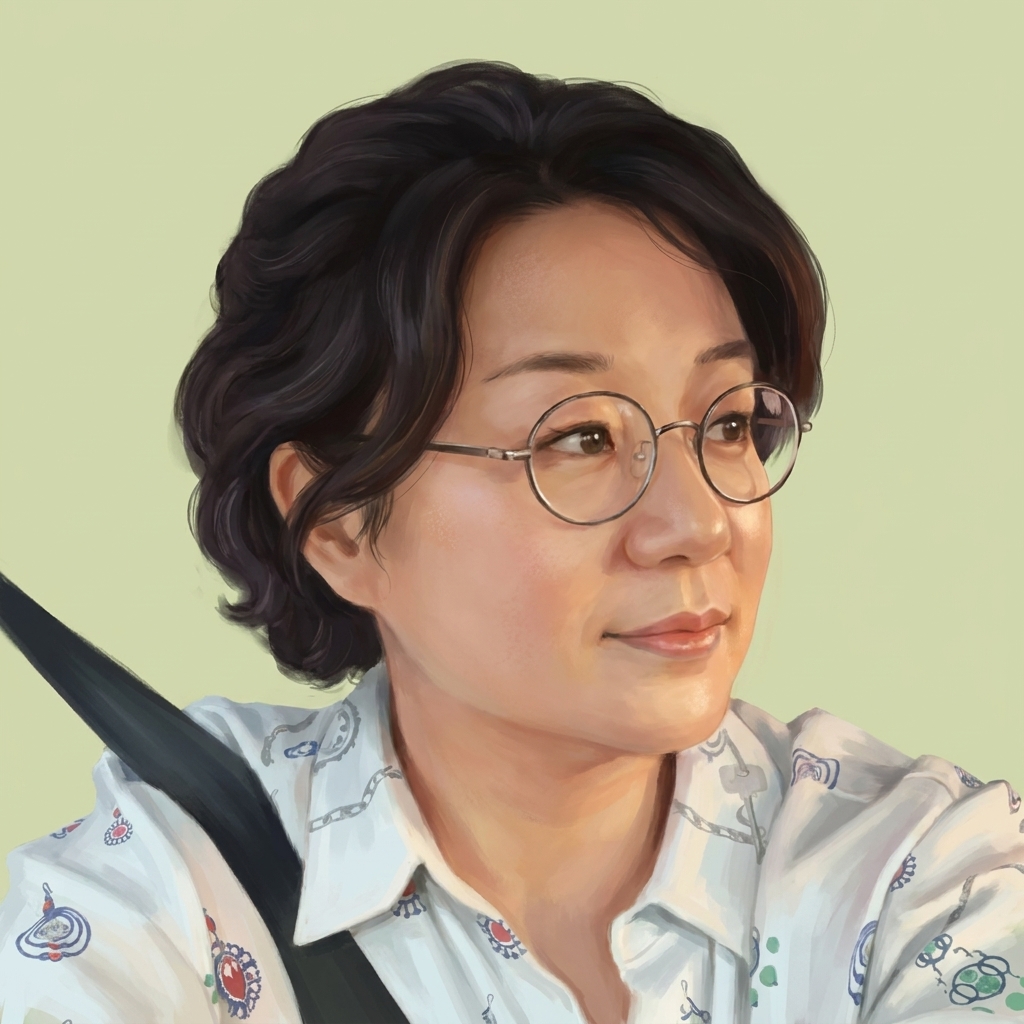
Grace is a registered nurse with thirteen years of clinical experience — five in Australia and eight in Korea — who also lives with ADHD. She writes The ADHD Nurse: honest, first-person guides and diaries about working, parenting, and getting through the day with an ADHD brain. Everything here is her personal experience and general information, not medical advice.