There’s a question that followed me for years after my late ADHD diagnosis: what if I’d known sooner? What if someone had named my ADHD when I was a child, and I’d grown up with the right support — maybe the right medication? But lately that question grew a second half, and it’s the one that actually changed me: what if my parents had known about theirs, too?
Here’s the short answer to what a late ADHD diagnosis did for me. It didn’t only explain me. It explained the two people who raised me — the same brain, handed quietly down.
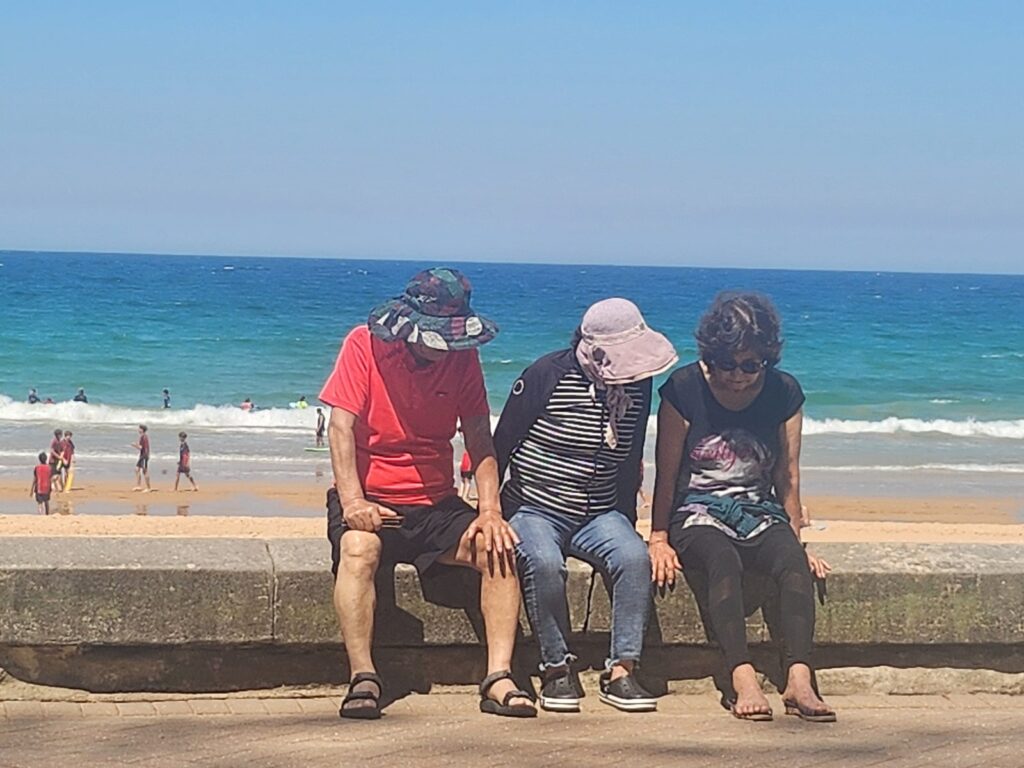
Is ADHD inherited from your parents?
It is — more than almost anything else in psychiatry. ADHD is one of the most heritable conditions there is, with twin studies putting heritability around 74% (Faraone & Larsson, 2019, Molecular Psychiatry). If a parent has ADHD, there’s roughly a 40% chance their child will have it too (Uchida et al., 2021, Journal of Attention Disorders).
When I look at my parents now, I see it everywhere. My father’s anger that arrived out of nowhere — I inherited that. My mother who could never keep the house in order — that’s me too, to the letter. I used to think these were just their faults, the specific ways they failed me. Now I understand they were never only faults. They were a brain — the same brain — handed down through three generations without anyone ever having a name for it.
I was their first child. And I was, by every account, a hard baby.
Why is undiagnosed ADHD so hard on a whole family?
Because no one has a name for what’s happening — to the child, or to the parents — so everyone blames themselves.
For the first months of my life, my days and nights were flipped. I was a sleepless, crying newborn who kept two already-exhausted parents awake around the clock — and somewhere in those blurry, depleted weeks, in a way I won’t spell out here, I absorbed a feeling I would carry for decades: that I was too much, that I had been set aside.
I can’t have a real memory from that age. But the feeling lodged in me anyway, and for years it stood as quiet proof that I hadn’t been wanted enough. Once, well into adulthood, I finally cried about it — in front of my parents, who are now in their eighties.
And here is what I understand now that I couldn’t then: it was never a lack of love. It was a lack of sleep, a lack of support, and a lack of any word for what was happening — to me, or to them. Two people with unmedicated, undiagnosed ADHD brains, with compromised executive function, were doing their best to keep a colicky, sleepless baby safe, with no name for why every part of it felt so impossibly hard. That isn’t a story of too little love. It’s a story of too little help.
For a long time I quietly blamed them. Now I need to set them free.
Why do adults with ADHD carry so much shame?
Because the blame doesn’t only point outward. It points in, too — and it starts younger than you’d think.
Dr. William Dodson estimates that by age 10, a child with ADHD has received 20,000 more negative or corrective messages than a child without it — stop that, hurry up, why can’t you just, what’s wrong with you (William Dodson, M.D., “ADHD and the Epidemic of Shame,” ADDitude, March 19, 2025). As Dr. William Dodson puts it, “For people with ADHD, shame arises from the repeated failure to meet expectations from parents, teachers, friends, bosses, and the world” (William Dodson, M.D., “ADHD and the Epidemic of Shame,” ADDitude, March 19, 2025). Twenty thousand. And the research on praise suggests it takes around three positives to undo one negative. Do that math and it’s almost unbearable: to balance the ledger, that child would need something like 45 encouragements for every scolding they actually got.
“For people with ADHD, shame arises from the repeated failure to meet expectations from parents, teachers, friends, bosses, and the world.”
— William Dodson, M.D.
No wonder so many ADHD adults carry a thick layer of internalized shame, grief, even self-hatred. We didn’t invent it. It was installed, one correction at a time, long before we could defend ourselves.
When my own daydreams wouldn’t stop, I thought I was losing my mind. When I couldn’t clean, when I was late again, I called myself lazy. It took a late ADHD diagnosis for me to finally see that none of it was a character flaw — it was neurology. And the moment I had real evidence for that, something loosened. I could stop whipping myself with just a little more, try a little harder. I could stop fighting against my own brain.
So now, instead of scolding it, I’m trying to comfort it. For simply surviving a day with a dopamine-starved brain, I think mine has earned 45 small pats on the head — well done, well done, you did so well.
Is a late ADHD diagnosis too late — or a new beginning?
It’s a beginning. A late ADHD diagnosis was never the end of the story — it’s the start of one: understanding why everything was so hard, finding a direction, and slowly rebuilding the self-esteem that 20,000 messages chipped away.
So I’ve decided to stop fighting this brain and start living with it — even using it, ADHD and all. Nothing is all weakness; every trait has a use if you angle it right. My favorite trick is the one I learned the hard way: work with the dopamine, not against it. Clean while there’s leftover dopamine in the tank — or, in reverse, deliberately save a little for the task I dread instead of spending it all on the fun thing first. Admit the things I hate and can’t do, and plan for the fuel they’ll need before I’m running on empty.
You build systems to prop up what’s weak. You let people help you. You use the things you’re genuinely good at to help someone else. And you keep a good psychiatrist close. Please — keep one close.
As for my parents: they couldn’t give me a word they never had. But I can give them one now. Not blame — understanding. The same brain that made my life hard made theirs hard first, in a time and place with no name for it and no help to be found. Loving myself, it turns out, includes loving the roots I grew from. I’m healthier now than they are; they’re getting old. It’s my turn to carry the gentleness back to them.
There’s a Korean song I keep coming back to — Beautiful Heart (기쁨 슬픔 아름다움) by AKMU. One verse says it better than I can:
…the sorrow that comes right on the heels of joy isn’t something to fear — it’s the mark of a tender, feeling heart. So don’t hurry past it on your feet; sit down, take your time, and when your heart is ready, let yourself gently be with it. Held that gently, it can become a brilliant masterpiece. — AKMU, “기쁨 슬픔 아름다운 마음 (Joy, Sorrow, A Beautiful Heart)”
If you were diagnosed late too — what did it explain about the people who raised you? I’d love to hear, in the comments. None of us inherited this alone.
This is my personal experience and general information, not medical advice. If shame, low self-worth, or old family wounds weigh on you, an ADHD-informed clinician or therapist can genuinely help — naming it, with the right support, can change everything
Grace is a registered nurse with thirteen years of clinical experience — five in Australia and eight in Korea — who also lives with ADHD. She writes The ADHD Nurse: honest, first-person guides and diaries about working, parenting, and getting through the day with an ADHD brain. Everything here is her personal experience and general information, not medical advice.